
When Currencies Move, Local Gold Prices Move Too
Published October 25, 2026 · Gold News analysis · All Gold News
Explainer: this article analyses how gold markets work. It is not breaking news and not investment advice. Prices shown on Gold Updates price pages are international spot equivalents, not local jeweller prices.
Gold has one world price but hundreds of local prices. A buyer in Mumbai, a buyer in Istanbul and a buyer in London may all follow the same dollar quote, yet the price each actually faces depends on their own currency. When that currency moves, the local gold price moves with it, even on days when the world price stands still.
The conversion is the price
For most countries, the local gold price is simply the dollar price converted at the current exchange rate, plus local premiums, taxes and dealer margins. If the dollar price is unchanged but the local currency weakens by five percent, the local price rises by roughly five percent. The arithmetic is simple; the consequences are not, because currency moves are often larger and faster than gold moves themselves.
This is why local gold markets can feel disconnected from headlines. A report that gold is flat globally can coincide with a sharp rise in the local price in a country whose currency is sliding, and with a fall in a country whose currency is strengthening. Neither local market is wrong; both are faithfully converting the same world price.
Currency crises amplify the effect
The effect is most dramatic during currency stress. When a currency depreciates rapidly, local gold prices surge in local terms, which often triggers more local buying as households seek a store of value, which can push local premiums higher still. The feedback loop means the local price can overshoot the converted world price for a time, until premiums normalise or the currency stabilises.
The reverse also happens. A strengthening currency can make gold look cheap locally even while the world price rises, dampening local demand. Exporters of gold jewellery feel the same effect from the other side: a stronger home currency makes their products more expensive abroad.
What to check before comparing prices across countries
A fair cross-country comparison needs three conversions, not one: currency, weight unit and purity. Prices quoted per tola, per baht weight, per tael or per don cannot be compared with per-gram or per-ounce prices until they share a unit, and a 22-karat price cannot be compared with a 24-karat price until purity is adjusted. Only after those conversions, and after accounting for taxes and premiums, does a genuine price difference emerge.
For readers of Gold Updates, the practical rule is simple: always note the currency and the date of a quote. A local price without its exchange-rate context is only half a price.
Sources
- Market exchange rates — the exchange rates used for Gold Updates conversions
- World Gold Council — gold demand trends by market (gold.org)
- International Monetary Fund — exchange-rate analysis (imf.org)
Gold price chart
COMEX gold futures (GC=F) · Daily closes · Last 3 months · In USD. This is futures data, not spot.
First close USD 4,077.00 · Latest close USD 4,039.90 · Low USD 4,007.90 · High USD 4,697.80
More Gold News

October 25, 2026
Buying Gold Wisely: Premiums, Purity Checks and the Total Price
The cheapest gold quote is rarely the cheapest purchase. Premiums, purity, making charges and buy-back terms decide what you actually pay — and what you get back.
October 25, 2026
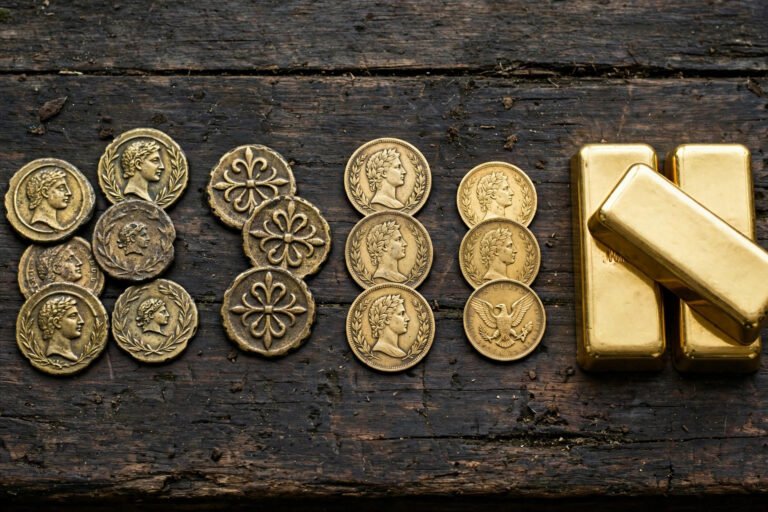
Long-Run Gold History: What Decades of Prices Actually Teach
Over fifty years, gold has soared, crashed and spent decades going nowhere. The long record teaches patience — and warns against extrapolating any single decade.
October 25, 2026
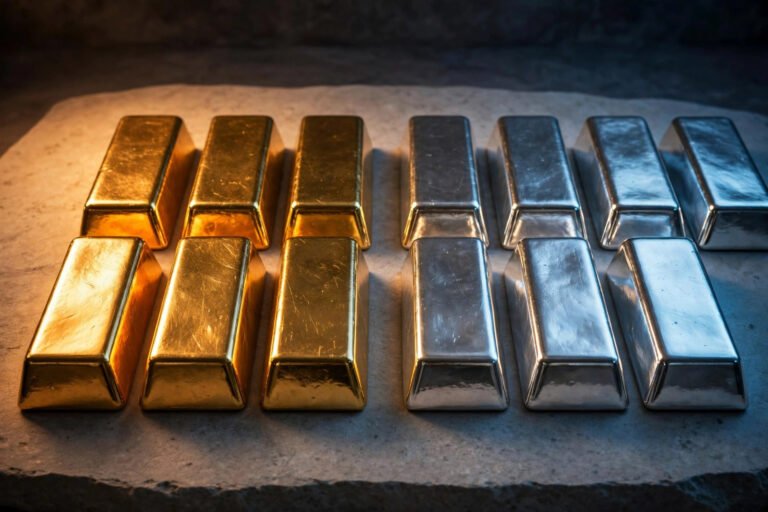
Gold vs Silver: Different Metals, Different Jobs
Gold and silver are often bought together, but they behave differently: one is primarily a monetary metal, the other is half investment and half industrial raw material.
October 25, 2026
Reading Futures vs Spot: What the Chart Is Actually Showing
Most gold charts plot futures, not spot. The distinction rarely matters for direction — until it does, in contract rolls, expiry weeks and moments of market stress.
October 25, 2026
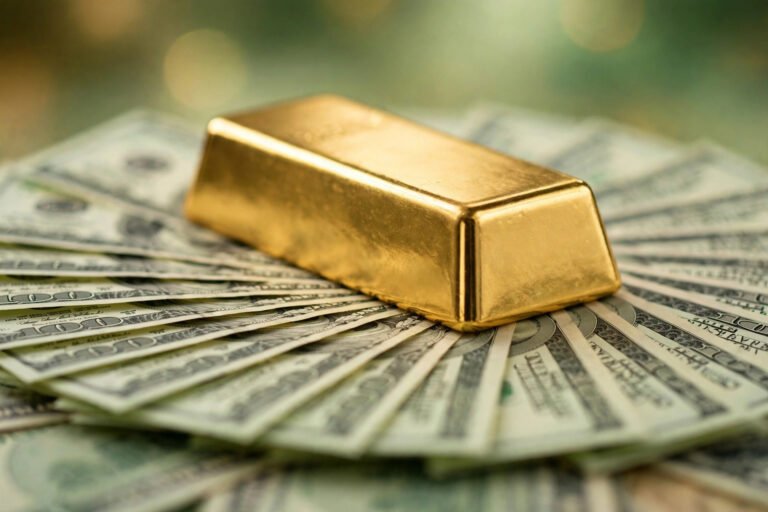
The Dollar-Gold Relationship, Explained
Gold and the dollar usually move in opposite directions, but the link is a tendency shaped by pricing, trade and investor flows — not a law of nature.
October 25, 2026
Inflation vs Gold: The Mechanics, Not the Myth
Gold is often called an inflation hedge, but the claim needs unpacking: gold protects against some kinds of inflation over some horizons, and fails badly over others.

October 25, 2026
How Rate Decisions Move Gold — and Why the Reaction Is Rarely Simple
When a central bank changes rates, gold usually reacts within minutes. The reason is not the rate itself but what it signals about growth, inflation and the value of holding cash instead of metal.
Related tools
Live gold pricesGold prices by countryGold calculatorCurrency converter